Brown County Auditor is the official county office responsible for managing financial records and property data in Brown County, Ohio. This office plays a direct role in county financial oversight by keeping accurate records tied to land, taxes, and public funds. Residents depend on these records for property details, tax information, and ownership history. The Brown County Auditor supports fair taxation by keeping values current and records consistent. These duties help county operations run smoothly and support daily public needs.
Property Records Search
Brown County Auditor services also support local government accountability through clear and verifiable reporting. The Brown County Auditor works closely with other county offices to maintain financial transparency and proper recordkeeping. This role sits at the center of public administration, linking property data with budgeting and revenue planning. For property owners and businesses, these records serve as trusted sources tied directly to county authority. Clear responsibility and official oversight make this office a reliable reference for both residents and government partners.

What Is a County Auditor in Ohio?
A county auditor in Ohio is an elected public office that manages property records, tax data, and county financial reporting. The role acts as a financial watchdog that supports transparency across local government.
Ohio’s County Auditor Role
In Ohio, the county auditor role is an elected position serving as the chief record keeper for property and fiscal data. The auditor maintains accurate financial records, ensures fair taxation, and provides information used by other county offices. Residents and businesses rely on this office for property valuations, ownership verification, and official tax data. The auditor’s office also handles tax administration authority, ensuring local property taxes, school funding, and levies are correctly calculated. This function is essential for smooth county operations and public confidence.
Key responsibilities include:
- Maintaining property ownership and valuation records
- Recording real estate transfers and parcel updates
- Preparing financial summaries for county departments and schools
- Certifying data for budget planning and tax distribution
Legal Foundation and Public Office Status
The county auditor in Ohio is a constitutionally established public office, elected directly by county residents. This ensures independence from other branches of local government and accountability to the public. The office has legal authority to maintain official financial books, manage tax records, and oversee local fiscal matters.
Key legal duties include:
- Maintaining real estate tax lists and valuations
- Keeping financial records of all county funds
- Certifying information for county budgets and levies
- Supporting fair tax distribution across districts
County Auditors vs State Auditors in Ohio
County auditors focus on local property and financial records within their county, while state auditors review agencies, counties, and schools across Ohio for compliance and financial accuracy.
- County auditors handle day-to-day record keeping and tax administration.
- State auditors perform audits and issue findings after reviewing county data.
How to Search Property Records
To search property records in Brown County, Ohio, use the Official Brown County Auditor property search tool available online. You can find details by address, parcel number, or owner name for free.
Open the Official Auditor Property Search URL
- Go to the Brown County Auditor’s Real Estate Search page: https://realestate.browncountyauditor.org/
- This is the official online property search database provided by the Brown County Auditor.
- No account or fee is required to view property information.
Choose Your Search Method
The auditor office tool lets you search property records in three main ways:
Address Search – Best when you know the street address.
Parcel Number Search – Most precise if you have the unique parcel ID.
Owner Name Search – Useful if you know who owns the property.
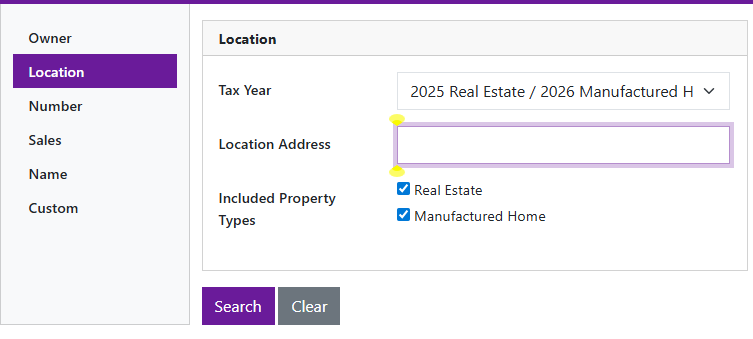
Address Search Example:
- Click the Address tab.
- Enter the full street number and name.
- Press Search to see matching parcels.
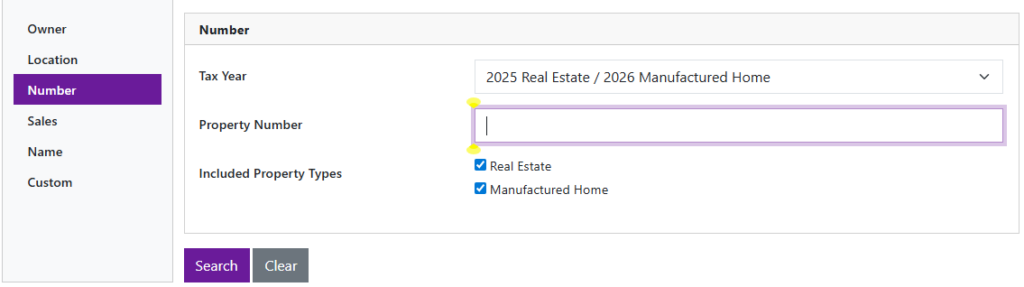
Parcel Number Search:
- Select the Number tab.
- Enter the exact parcel ID shown on tax bills or deeds.
- Click Search to find the specific property.
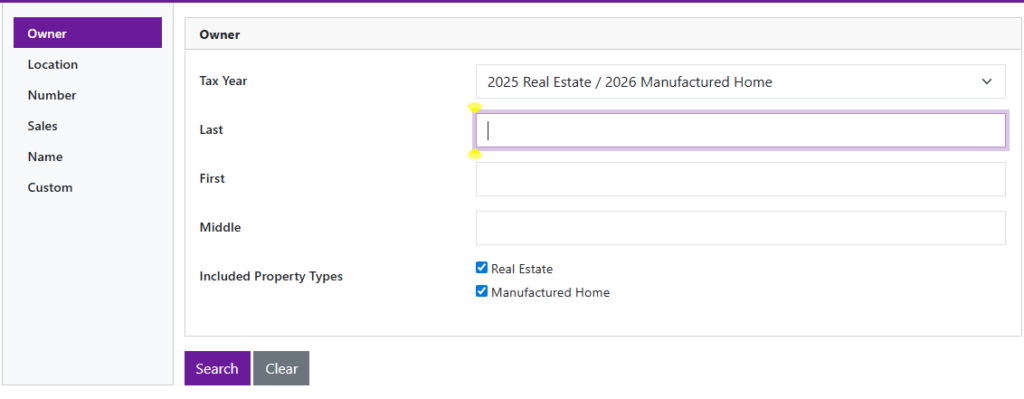
Owner Name Search:
- Choose Name/Search By Owner tab.
- Enter at least a few letters of the owner’s last name.
- Press Search to view all parcels registered under that name.
Review Search Results
Once results appear, you can click on the correct property to view a detailed property report. That report usually includes:
- Owner name
- Property address
- Parcel number
- Assessed value
- Land and building details
- Tax payment history
- Property classification
- Sales/transfer information
Export or Print Property Data
After opening a property record:
- Use browser print to create a PDF copy for records.
- Some pages allow export/download of data files for offline use.
Responsibilities of the Brown County Ohio Auditor
The Brown County Ohio Auditor plays a central role in managing property values, preparing tax records, and protecting the accuracy of county financial information. This public office supports fair taxation and keeps local government finances transparent for residents. The auditor responsibilities in Brown County connect directly to property ownership, tax roll management, and official financial record keeping. Residents often interact with the auditor’s office when checking property assessments, reviewing tax details, or confirming parcel information.
Property Assessment Oversight
One of the most visible duties of the Brown County Ohio Auditor is supervising property valuation across the county. This work helps confirm that every parcel is assessed fairly and consistently. The auditor’s office reviews land and building values so property taxes are based on accurate data. These values affect homeowners, businesses, and even school funding allocations.
Key property assessment tasks include:
- Maintaining parcel maps and ownership records
- Updating property values after sales or improvements
- Supporting equal assessment standards countywide
- Providing online parcel lookup tools for public use
Tax List Preparation and Tax Roll Management
Another major part of auditor responsibilities involves building the official tax lists used each year. The auditor prepares the county’s tax roll management records, which guide how property taxes are calculated and billed. This process connects multiple local offices, including the county treasurer, school districts, and township services.
Common tax administration duties include:
- Creating annual real estate tax lists
- Applying exemptions or classifications when eligible
- Certifying values used for tax billing
- Tracking property transfers that impact taxation
Maintaining Public Financial Integrity
The Brown County Ohio Auditor also serves as a guardian of financial record keeping and public accountability. The office keeps official fiscal records that county agencies rely on for budgeting and reporting. This work supports trust in local government by confirming that public funds are recorded correctly and distributed properly.
Financial integrity responsibilities often include:
- Maintaining county fund ledgers
- Reporting financial activity for local departments
- Supporting budget preparation with verified data
- Acting as a financial watchdog for public administration
Property Oversight & Real Estate Assessment
Property oversight and real estate assessment help keep property taxes fair by confirming that values match current market conditions. The county auditor’s office reviews parcels, classifications, and valuation data so homeowners and investors can rely on accurate public records. Property oversight plays a major role in local tax systems, especially in Ohio counties. It connects directly to how property values are assigned, how taxes are calculated, and how records stay consistent across neighborhoods. For homeowners, this process supports fairness. For investors and real estate professionals, it provides reliable data for decision-making.
How Real Estate Assessment Supports Fair Market Value
Real estate assessment is the process counties use to estimate a property’s fair market value. Fair market value reflects what a property could reasonably sell for under normal conditions. These valuations form the foundation of the local property tax system and help keep tax responsibilities balanced.
The auditor’s office reviews many factors during assessment, such as:
- Recent sales in the area
- Property size and location
- Building condition and improvements
- Market trends affecting local pricing
Property Classification and Parcel Types
Property oversight also depends on correct property classification. Every parcel is placed into a category based on how the land or building is used. This classification matters since residential and commercial properties follow different valuation standards and tax structures.
Common parcel categories include:
- Residential parcels (single-family homes, apartments)
- Commercial parcels (retail, offices, warehouses)
- Agricultural land and farms
- Industrial property
- Vacant lots and undeveloped land
Why Property Oversight Matters to Homeowners
For homeowners, property oversight protects fairness and accuracy in the tax system. When assessments match real market conditions, homeowners are less likely to face unfair tax burdens compared to neighboring properties.
Homeowners often use assessment records to:
- Confirm property value estimates
- Review tax history before buying or selling
- Check parcel boundaries and ownership details
- Request a review if the value seems incorrect
Value for Investors and Real Estate Professionals
Investors and agents rely on real estate assessment data to evaluate opportunities and estimate long-term costs. County parcel records help compare neighborhoods, identify trends, and support smarter purchase decisions.
Useful assessment details include:
- Current and past valuation changes
- Residential and commercial parcel breakdowns
- Sales history and transfer dates
- Property classification for development planning
Property Valuation Process
Property valuation in Ohio follows state-approved standards to keep assessments fair and consistent. County tax authority offices update values through scheduled appraisal cycles and provide appeal options for property owners. Property valuation is the process used to estimate a parcel’s market-based worth for taxation. In Ohio, counties must follow rules set by the Ohio Department of Taxation. These standards help confirm that homeowners, investors, and businesses are assessed under the same system, with clear oversight and accountability.
How Ohio Property Valuation Works
Ohio counties determine property values by reviewing sales data, property characteristics, and local market trends. The county tax authority uses professional appraisal methods to estimate what a property would sell for under normal conditions.
Valuation reviews often consider:
- Recent comparable sales in the neighborhood
- Land size, building condition, and improvements
- Property classification (residential or commercial)
- Market changes affecting local demand
Appraisal Cycles and Reappraisal Timelines
Ohio law requires regular appraisal cycles to keep property values current. Counties complete a full reappraisal every six years, with a value update (often called a triennial update) every three years between full reappraisals. This schedule supports consistent valuation updates and reduces sudden or uneven changes in assessed values.
Typical cycle includes:
- Year 1: Full countywide reappraisal
- Year 3: Mid-cycle valuation update
- Year 6: Next full reappraisal
Valuation Updates and Record Accuracy
Property values may change outside the normal cycle if major events occur. For example, new construction, demolition, or parcel splits can trigger updates. Counties record these changes to maintain accurate tax rolls and ownership records. This system helps property taxation remain aligned with actual property conditions.
Assessment Appeals and Taxpayer Rights
Ohio property owners have the right to challenge an assessment if they believe it does not reflect fair market value. The assessment appeals process allows taxpayers to present evidence, such as recent sales data or appraisal reports.
Common reasons for appeals include:
- Overvaluation compared to similar nearby homes
- Incorrect property classification
- Errors in parcel size or building details
Brown County Auditor & Property Taxes
The Brown County Auditor works as a local tax authority by maintaining property values and applying tax calculations based on approved rates. The auditor office does not create tax rates but plays a key role in distributing accurate tax information for billing. Property taxes in Brown County can feel confusing, especially for new homeowners. Many people assume the auditor office sets tax bills directly. In reality, the auditor’s job focuses on property valuation, tax roll preparation, and applying the correct rates approved by voters and local districts.
How Property Taxes Are Calculated
Property taxes start with the assessed value of a home or parcel. The auditor office maintains this value using Ohio appraisal standards. Once a value is confirmed, tax calculation depends on local rates.
The basic process works like this:
- Property is assigned an assessed value
- Local millage rates are applied to that value
- Total taxes are calculated for each taxing district
- Bills are issued through the county treasurer
So, the auditor office provides the numbers and structure, while the treasurer handles collection.
Key factors that affect tax totals include:
- Property classification (residential or commercial)
- School district tax levies
- Voter-approved bond issues
- Township and county service rates
What Millage Rates Mean
Millage rates are the tax rates used to calculate what property owners owe. One mill equals $1 of tax for every $1,000 of assessed property value.
Millage rates come from multiple local sources, such as:
- Public school districts
- County government services
- City or township levies
- Special voter-approved tax measures
Levy Distribution and Where the Money Goes
A common misunderstanding is that property taxes go only to the county. In fact, levy distribution spreads tax revenue across many local services.
Property taxes often support:
- Local schools and education funding
- Fire departments and emergency services
- Road maintenance and infrastructure
- Libraries and community programs
Who Sets Rates vs Who Applies Them
This is one of the biggest points of confusion for taxpayers.
Rates are set by:
- Voters through levy elections
- School boards and local governments
- Ohio tax law requirements
Rates are applied by:
- The county auditor office during tax calculation
- The county treasurer during billing and collection
Misunderstandings About Property Taxes
Many residents contact the auditor office thinking it can change their tax bill instantly. In most cases, taxes rise because of voter-approved levies or updated property values, not because the auditor created a new rate.
Common misunderstandings include:
- “The auditor decides my tax rate”
- “Higher value always means higher taxes immediately”
- “All taxes stay within county government”
Public Records Maintained by the Auditor’s Office
The county auditor’s public office maintains key public records related to property ownership, valuations, and local taxation. These records help residents verify property details, track tax history, and support transparent county operations.
The auditor’s office serves as an official source for reliable property and financial documentation. Homeowners, buyers, attorneys, and real estate professionals often use these records to confirm ownership, review assessments, and understand how taxes are applied. Since the information comes directly from county systems, it carries strong trust value for both users and search engines.
Core Public Records Available Through the Auditor
The auditor’s office keeps several important record types that support county accountability. These files are part of the local government’s commitment to open and accessible information.
Common public records include:
- Property cards showing building details, land size, and assessed values
- Parcel maps and classification data for residential and commercial parcels
- Tax duplicate records listing taxable values and levy charges
- Property transfer documents tied to sales or deed updates
- Exemption records for qualifying homeowners or programs
Ownership History and Parcel Documentation
One of the most requested record categories involves ownership history. The auditor tracks changes in ownership when properties are sold, transferred, or inherited. This creates a clear chain of title information for public reference.
Ownership-related records often include:
- Current owner name and mailing address
- Prior sale dates and transaction amounts
- Parcel number changes from splits or combinations
- Recorded property classification updates
Why These Records Matter for Public Trust
Public records maintained by the auditor’s office strengthen local government accountability. Residents can review official data rather than relying on unofficial sources. This transparency supports fair taxation, accurate valuations, and informed property decisions.
Auditor records are especially valuable for:
- Home purchase research
- Tax verification and budgeting
- Legal property documentation
- Real estate investment analysis
Auditor Office vs Other County Offices
The county auditor role is often confused with other local departments, but each public office has a separate job. The auditor focuses on property values, tax records, and financial reporting, while offices like the treasurer and recorder handle different parts of the process. Many residents search for help with taxes, deeds, or property ownership and aren’t sure which county office to contact. Understanding the differences saves time and helps people reach the right department faster.
County Auditor Role in Local Government
The county auditor role centers on property valuation, tax roll preparation, and maintaining official financial records. This office acts as the record keeper for parcel data and assessed values used in tax calculations.
The auditor office supports:
- Real estate assessment and classification
- Tax list preparation for billing
- Public property records and valuation updates
- Financial oversight for county funds
Treasurer vs Auditor
A common comparison is treasurer vs auditor, since both deal with property taxes.
The difference is simple:
- The auditor calculates values and applies tax rates to create the tax roll
- The treasurer sends tax bills, collects payments, and manages delinquent taxes
Recorder vs Auditor
Another frequent confusion is recorder vs auditor.
- The county recorder keeps official deed documents, mortgages, and legal land records
- The auditor tracks parcel ownership changes for taxation and assessment purposes
Assessor Comparison in Ohio
In some states, a separate assessor exists. In Ohio, the county auditor typically performs the assessment function.
This assessor comparison often includes:
- Property valuation oversight
- Residential and commercial parcel classification
- Fair market value updates through appraisal cycles
Appeals, Corrections & Disputes
Property owners in Ohio can challenge valuation errors through a formal valuation appeal process. Under property oversight rules, the county tax authority provides correction options and a Board of Revision for disputes. Even with careful assessment systems, mistakes can happen in property records. A home may be overvalued, classified incorrectly, or listed with wrong building details. When this occurs, property owners have the right to request corrections or file an appeal to protect fair taxation.
When a Valuation Appeal May Be Needed
A valuation appeal is usually filed when a property’s assessed value does not reflect fair market conditions. Homeowners, investors, and businesses may appeal if they believe the value is too high compared to similar nearby parcels.
Common reasons for appeals include:
- Assessed value higher than recent comparable sales
- Incorrect square footage or property features
- Wrong property classification (residential vs commercial)
- Valuation changes after reappraisal cycles
Role of the Board of Revision
In Ohio, valuation disputes are reviewed by the Board of Revision, a county-level panel that hears assessment complaints. This process allows taxpayers to present evidence, such as appraisals, sales data, or corrected property information.
The Board of Revision typically reviews:
- Market value disputes
- Classification errors
- Assessment fairness compared to similar parcels
Correction Requests for Record Errors
Not every issue requires a formal appeal. Some problems can be resolved through simple correction requests submitted to the auditor’s office.
Examples of correctable issues include:
- Wrong owner mailing address
- Parcel boundary or numbering mistakes
- Missing exemption documentation
- Data entry errors in property cards
Transparency & Accountability in Brown County
Transparency and accountability are core responsibilities of every county public office, especially the auditor’s department. The county auditor role helps protect taxpayers by keeping property and financial records open, accurate, and easy to review. In Brown County, the auditor’s office supports government transparency by maintaining trusted public data about property values, tax distributions, and local funding. Residents depend on these records to understand how taxes are calculated and where public money goes. Clear documentation strengthens confidence in county operations and reduces confusion for homeowners and businesses.
How the County Auditor Role Supports Fiscal Accountability
The county auditor role acts as a key checkpoint for fiscal accountability in local government. The auditor tracks property assessments, prepares tax rolls, and keeps financial records that guide budgeting across county departments.
This accountability helps confirm that:
- Property values are applied fairly across parcels
- Tax levies are distributed to the correct districts
- Public funds are recorded with accuracy
- Financial reporting remains consistent year to year
Taxpayer Protection Through Public Records
A major part of taxpayer protection comes from open access to records. Property owners can review assessments, check parcel history, and question incorrect information through appeals or correction requests.
Public access supports fairness by allowing residents to:
- Compare values with similar properties
- Verify ownership and classification details
- Understand millage rates and levy charges
- Request updates when records appear wrong
Location
The Brown County Auditor Ohio auditor office location serves as the primary physical contact point for residents needing verified county property or financial information. While many services are handled online, a confirmed office address helps users plan visits for document verification, parcel clarification, or record inquiries that require direct staff interaction. Understanding the exact location improves user confidence and reduces confusion when coordinating travel to county departments. Clear address visibility also strengthens trust signals and supports search relevance for users looking for official government office directions.
Office Location Details
This central placement allows convenient reach for homeowners, investors, and real estate professionals managing property matters within the county jurisdiction. Visitors arriving at this location will find access to the auditor department alongside other county services, allowing multiple administrative tasks to be completed during one visit. Knowing these details beforehand helps users prepare required documents and reduces unnecessary delays.
The auditor office operates within the county administrative complex in
Georgetown, part of
Brown County,
Ohio.
- Address:
800 Mt. Orab Pike, Suite 181
Georgetown, OH 45121 - Office Hours:
Monday – Friday
7:30 AM – 4:00 PM - Phone:
(937) 378-6398
Location Context for Visitors
Traveling to the auditor office becomes beneficial when requests involve physical records or documentation review. Direct interaction with staff allows clarification of property listings, ownership data, or assessment notices that may not be resolved through digital channels.
Typical reasons residents visit this location include:
- Certified record requests
- Parcel ownership corrections
- Property card or map review
- Filing documentation related to assessments
Frequently Asked Questions
Understanding how a public office manages records, taxes, and financial duties can help residents navigate services more efficiently. The following frequently asked questions address common concerns related to the Brown County Ohio Auditor, focusing on property taxes, public records access, and the scope of auditor duties while remaining structured for SEO visibility and voice search use.
What services are handled by the Brown County Ohio Auditor?
The Brown County Ohio Auditor manages property valuations, tax calculations, and financial oversight responsibilities that support county operations. Working through Brown County Auditor’s Office in Brown County, the office maintains ownership records, updates assessment data, and prepares fiscal reports that ensure accountability across departments. Beyond property matters, the auditor tracks payroll, monitors budgets, and safeguards public funds. These combined duties make the office a key administrative authority responsible for transparency and taxpayer confidence within the local government structure.
How can residents check property taxes or records?
Residents can review property taxes and ownership details through resources provided by Brown County Government either online or by visiting the office directly. Public records access typically includes parcel identification data, value history, and estimated tax information for reference purposes. While most information is openly available, some documentation may require formal requests or identity verification. Contacting the office ensures users receive accurate and updated details, especially when records are needed for legal or financial transactions.
Why does the auditor reassess property values?
Periodic reassessment helps maintain fairness by aligning property values with market conditions. The auditor evaluates comparable sales, structural characteristics, and regional trends to determine updated estimates. This process ensures that property taxes are distributed equitably among taxpayers rather than relying on outdated figures. Although reassessment influences tax calculations, it does not directly set tax rates, which are determined by local budgeting authorities. Instead, it establishes a consistent valuation foundation that supports balanced revenue distribution.
Where is the auditor’s office located and how can I contact it?
The office serving residents of Brown County operates from the county administrative center in Georgetown, where in-person assistance is available during business hours. Visitors can request help with tax questions, public records access, or clarification regarding auditor duties by phone, mail, or office visits. Confirming hours and document requirements before arrival is recommended to ensure efficient service. Direct communication with staff helps resolve inquiries faster and ensures residents receive official guidance tailored to their needs.